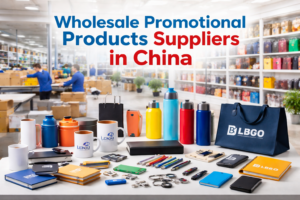


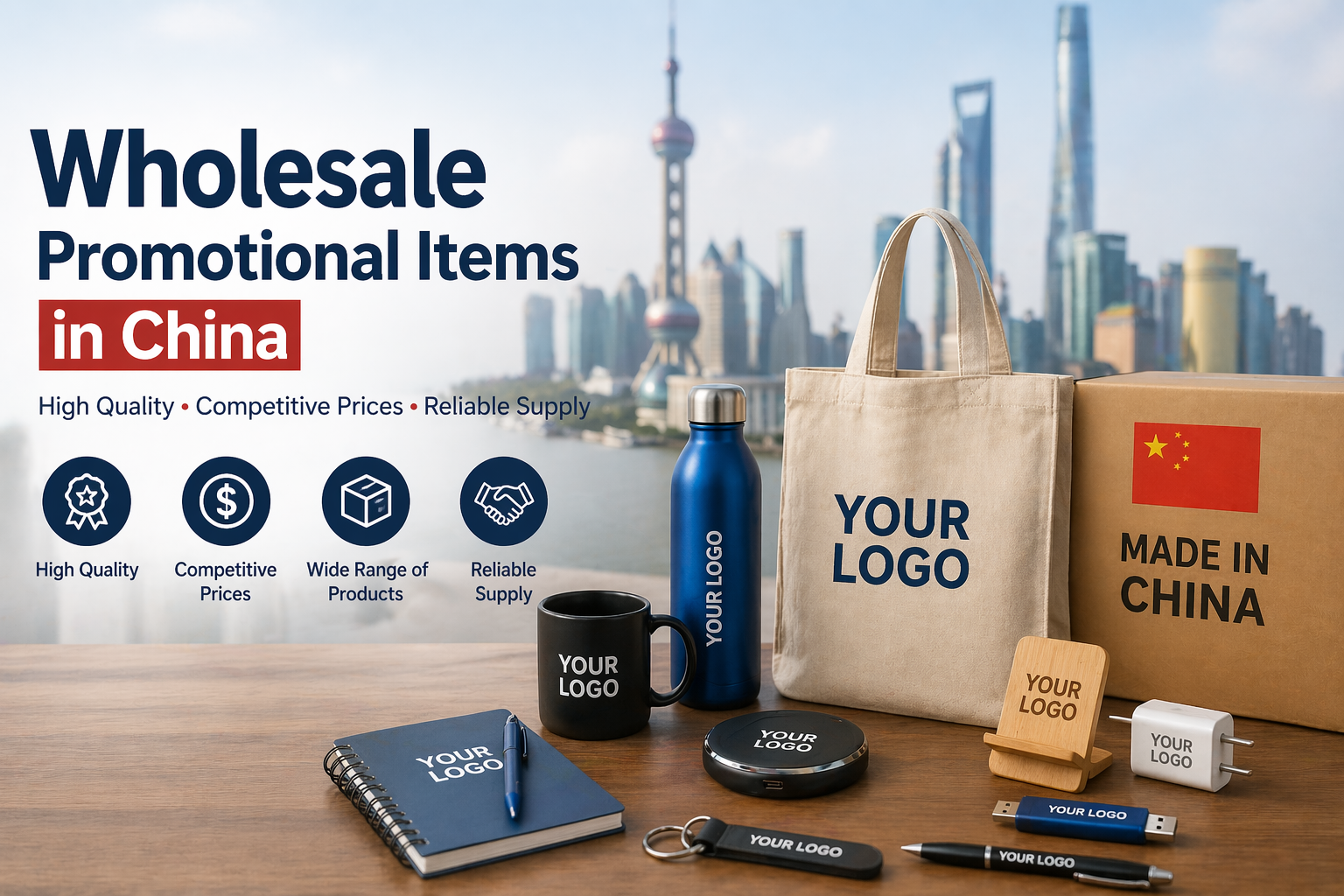
For businesses around the world, promotional items remain one of the most effective marketing tools. A branded pen, a custom keychain, or a logo-printed tote bag can keep a company name in front of potential customers for months or even years.
When it comes to sourcing these products at scale, one country dominates the global market: China. No other nation produces promotional merchandise in greater volume, at lower costs, or with more variety. However, sourcing wholesale promotional items in China is not as simple as clicking a button and waiting for a shipment to arrive. It requires research, negotiation, quality control, and an understanding of international logistics. This guide walks every step of the way for a business owner or marketing manager looking to source promotional products from Chinese manufacturers.
Why China Remains the Global Capital of Promotional Products
China’s dominance in the promotional products industry is not accidental. Decades of investment in manufacturing infrastructure, a massive labor force, and an intricate network of suppliers have created an ecosystem that no other country can match. From simple plastic keychains to complex electronic gadgets with custom branding, Chinese factories produce it all. For a business looking to order thousands or even millions of units, China offers price points that make promotional campaigns financially viable.
Unbeable Pricing Through Economies of Scale
The primary reason businesses turn to Chinese suppliers is cost. A promotional item that might cost five dollars to produce in North America or Europe can often be manufactured in China for less than one dollar. This price difference comes from several factors. Raw materials are sourced locally at lower prices. Labor costs, while rising, remain competitive compared to Western countries.
Electricity, factory space, and logistics are all more affordable. Additionally, Chinese factories operate at massive scales. A single factory might produce millions of identical items per month, spreading fixed costs across such a high volume that the cost per unit drops dramatically. For a business ordering ten thousand custom water bottles, that low per-unit cost makes the difference between a profitable giveaway and a budget-breaking expense.
An Almost Unlimited Variety of Products
Another advantage of sourcing from China is the sheer variety of promotional items available. A business is not limited to standard catalog items. Chinese manufacturers routinely produce custom shapes, unique materials, and complex branding requirements. If a company wants a stress ball shaped like its logo, a Chinese factory can make it. If a business needs a reusable shopping bag made from recycled ocean plastics, there are suppliers for that too.
The flexibility extends to colors, finishes, packaging, and even electronic components. For promotional products that include LED lights, speakers, or USB drives, Chinese factories have extensive experience integrating these elements into custom designs. This variety allows a business to create truly unique promotional items that stand out in a crowded marketplace.
Established Platforms That Simplify Sourcing
The rise of business-to-business platforms has made sourcing from China easier than ever before. Websites like Alibaba, Made-in-China, and Global Sources connect buyers directly with thousands of verified manufacturers. These platforms offer features like trade assurance, supplier verification, and customer reviews that help a buyer separate reliable factories from questionable ones. A business can browse product categories, request quotes, order samples, and communicate directly with factory representatives, all from a single dashboard. While these platforms do not eliminate the need for due diligence, they have dramatically lowered the barrier to entry for businesses that might otherwise be intimidated by the prospect of sourcing from overseas.
The Most Popular Categories of Promotional Items Sourced from China
Not all promotional items are equally suited for Chinese manufacturing. Some categories have become specialties of certain regions within China, where entire towns are dedicated to producing one type of product. Understanding these categories helps a business focus its search on suppliers with relevant expertise.
Custom Apparel and Textiles
Custom clothing is one of the largest categories of promotional items sourced from China. T-shirts, caps, hoodies, polo shirts, and aprons with embroidered or screen-printed logos are perennial favorites for trade shows, corporate events, and employee uniforms. The cities of Guangzhou and义乌 (Yiwu) are particularly known for textile production. A buyer can choose from dozens of fabric types, hundreds of colors, and multiple printing methods including screen printing, heat transfer, and direct-to-garment digital printing. The low cost of blank garments in China means that even small orders of one hundred shirts can be priced competitively. For larger orders of several thousand units, the per-unit cost becomes almost negligible, making custom apparel one of the most cost-effective promotional items available.
Drinkware and Reusable Bottles
Promotional drinkware remains consistently popular for good reason. A branded water bottle, coffee mug, or travel tumbler is used daily, providing repeated exposure for the company logo. Chinese manufacturers produce drinkware in every conceivable material. Stainless steel vacuum bottles keep drinks hot or cold for hours. Glass mugs with ceramic coatings offer a premium feel. Plastic sports bottles with flip tops are lightweight and inexpensive. The city of Yongkang in Zhejiang province is widely known as China’s capital of stainless steel drinkware production. Factories there offer customization options ranging from simple screen printing to full-color digital wraps and even 3D embossing of logos. A business can order bamboo-lid bottles for an eco-friendly brand or sleek metallic bottles for a fitness company, all from the same region.
Writing Instruments and Desk Accessories
Pens, pencils, highlighters, and sticky note holders might seem like simple items, but they remain among the most widely distributed promotional products in the world. A branded pen finds its way into pockets, desk drawers, and conference rooms. Chinese factories produce writing instruments in staggering quantities. The city of Ningbo is a major hub for pen manufacturing, producing billions of units annually. Customization options include pad printing of logos on barrels, laser engraving on metal pens, and even custom ink colors. Beyond pens, Chinese suppliers also offer branded notebooks, mouse pads, desk organizers, and sticky note dispensers. These items appeal to office workers and professionals, making them ideal for B2B marketing campaigns.
Tech Accessories and Gadgets
As the world becomes more digital, promotional tech accessories have grown in popularity. Branded power banks, USB cables, phone stands, Bluetooth speakers, and webcam covers are all readily available from Chinese manufacturers. The city of Shenzhen, often called China’s Silicon Valley, is the epicenter of electronics production. Factories there can produce custom power banks in any color with a logo printed directly on the casing. Some suppliers offer more advanced customization, including pre-loading files onto USB drives or programming Bluetooth speakers to pair with a custom network name. Tech accessories appeal to younger demographics and position the brand as modern and innovative. However, a buyer should be aware that electronics require more rigorous quality control than simpler promotional items.
Bags and Totes
Reusable shopping bags, drawstring backpacks, tote bags, and cooler bags are popular promotional items for businesses with an environmental message or for events where attendees need to carry materials. Chinese manufacturers produce bags from a wide range of materials. Non-woven polypropylene is the most common and least expensive option. Cotton and jute offer a natural, eco-friendly appearance. Nylon and polyester provide durability and water resistance. The city of Fuzhou is known for bag manufacturing, while Yiwu offers a massive selection of low-cost options. Customization includes screen printing, heat transfer, and even woven labels that give a more premium feel. A business ordering promotional bags from China should pay close attention to stitching quality and handle reinforcement, as these are common failure points in lower-quality products.
How to Find Reliable Wholesale Suppliers in China
Finding a supplier is easy. Finding a reliable supplier is much harder. The difference between a good factory and a bad one can mean the difference between a successful promotional campaign and a warehouse full of unusable products. A business should approach supplier selection with the same rigor it applies to any other major purchasing decision.
Red Flags That Indicate an Unreliable Supplier
Certain warning signs should make a buyer think twice before proceeding with a supplier. A supplier that cannot provide clear, high-resolution photos of its products may be hiding poor quality. A supplier that refuses to send a sample before a bulk order is either unable or unwilling to stand behind its work. A supplier that offers prices dramatically lower than every other quote is likely cutting corners on materials or labor. A supplier that pressures a buyer to pay in full before producing samples is taking an unacceptable risk. A supplier that has no physical address or factory photos on its profile may be a trading company posing as a manufacturer. A buyer who ignores these red flags often ends up with delayed shipments, inferior products, or no products at all.
The Critical Importance of Product Samples
No business should ever place a bulk order for promotional items from China without first ordering and inspecting a physical sample. A sample reveals what product photos cannot. The sample shows the true color, which often differs from what appears on a screen. The sample shows the material thickness, the stitching quality, the print adhesion, and the overall workmanship. A buyer should order at least two or three samples, ideally from different suppliers, to compare quality directly. The sample should be produced using the same manufacturing process as the bulk order, not a hand-made prototype. If a supplier charges for samples, that is normal and reasonable. If a supplier refuses to provide a sample under any circumstances, that supplier should be eliminated from consideration immediately.
Understanding Pricing, MOQs, and Payment Terms
Chinese manufacturers operate differently from Western suppliers. A first-time buyer might be surprised by minimum order quantities, payment structures, and pricing negotiations. Understanding these norms prevents frustration and helps a buyer secure better terms.
Minimum Order Quantities and How to Negotiate Them
Most Chinese factories have minimum order quantities, commonly called MOQs. These MOQs exist because factories are set up for efficient mass production. Setting up a production line for one hundred units costs almost as much as setting it up for one thousand units. For common promotional items like pens or keychains, MOQs of 5,000 to 10,000 units are typical. For more specialized items like custom Bluetooth speakers, MOQs might start at 500 units. A buyer who needs smaller quantities has several options. One option is to find a trading company or a smaller factory that specializes in low-volume orders. Another option is to ask the factory if it has overstock or canceled orders in a similar style. A third option is to offer to pay a slightly higher per-unit price in exchange for a lower MOQ. Most factories are willing to negotiate, especially if the buyer seems serious and prepared to place an order.
Payment Terms That Protect the Buyer
The standard payment structure for manufacturing in China is a deposit before production begins, with the balance paid before shipment. A typical arrangement is 30 percent deposit and 70 percent balance against a copy of the bill of lading. The deposit covers the factory’s costs for raw materials and production setup. The balance is paid once the goods are ready to ship. For larger orders or first-time buyers, using a payment method that offers buyer protection is essential. Alibaba’s Trade Assurance holds the buyer’s payment in escrow until the buyer confirms receipt of the goods. Letters of credit, while more complex, offer another layer of protection for very large orders. A buyer should never pay 100 percent of the order value upfront, as that leaves no leverage if the goods are delayed, defective, or never produced at all.
Hidden Costs That Affect the Final Price
The price quoted by a Chinese factory rarely represents the total landed cost. Several additional expenses must be factored into the budget. Shipping costs vary wildly depending on the weight, volume, and shipping method. Air freight is fast but expensive. Sea freight is slow but economical for large orders. Customs duties and import taxes vary by country and product category. A buyer should research these rates before finalizing a budget. Additionally, some factories charge tooling fees for creating custom molds or dies. These fees are one-time costs that apply to the first order only. Finally, quality inspection services, if hired externally, add to the cost but are often worth the expense for large orders. A smart buyer calculates the total landed cost per unit before making a final decision.
Quality Control and Inspection Best Practices
Promotional items represent a company’s brand. A poorly made product with a crooked logo or fading ink reflects badly on the business that distributed it. Quality control should never be an afterthought when sourcing from China.
Pre-Production, During-Production, and Pre-Shipment Inspections
Professional buyers use a three-stage inspection process. The pre-production inspection occurs before the factory starts manufacturing. The buyer or an inspector verifies that the raw materials match the specifications. The during-production inspection occurs when approximately 20 to 30 percent of the order is complete. This allows problems to be caught and corrected before the entire order is affected. The pre-shipment inspection occurs when the entire order is complete but before it leaves the factory. The inspector randomly samples units from the finished batch and checks them against the agreed specifications. A buyer who cannot travel to China can hire third-party inspection companies like SGS, Bureau Veritas, or QIMA to perform these inspections on their behalf.
Creating a Clear Product Specification Sheet
Many quality disputes arise from miscommunication rather than malice. A Chinese factory might produce exactly what the buyer described, but the buyer described it poorly. The solution is a detailed product specification sheet that leaves nothing to interpretation. This sheet should include exact measurements in millimeters, material specifications, color codes (Pantone or CMYK), logo placement coordinates, packaging requirements, and acceptable defect tolerances. Photographs or CAD drawings of the desired product are invaluable. A buyer who provides a clear specification sheet has a much stronger case if the delivered product does not meet expectations. Without a written specification, the buyer has little recourse.
Shipping, Logistics, and Delivery Timelines
Getting products from a Chinese factory to a warehouse anywhere in the world involves multiple steps. Understanding these steps helps a buyer plan realistic timelines and avoid last-minute surprises.
Air Freight Versus Sea Freight
The choice between air and sea freight comes down to three factors: speed, cost, and order size. Air freight delivers products in three to ten days but is expensive, often costing five to ten times more than sea freight. Sea freight takes four to six weeks for delivery to North America or Europe but offers the lowest cost per unit for large orders. For promotional items needed urgently for a trade show or product launch, air freight is worth the premium. For routine inventory replenishment or long-term campaigns, sea freight is the smarter financial choice. Some buyers use a hybrid approach, shipping a small air freight order to meet an immediate deadline while the main sea freight order follows later.
Working with a Freight Forwarder
A freight forwarder is a logistics specialist who handles the complexities of international shipping. The forwarder arranges cargo pickup from the factory, books space on a ship or plane, handles customs clearance documentation, and coordinates delivery to the buyer’s final address. For a business that does not ship internationally regularly, using a freight forwarder is highly recommended. The forwarder’s fee is typically a few hundred dollars plus a small percentage of the shipping cost. The alternative is navigating customs forms, tariff codes, and carrier schedules alone, which is a recipe for delays and costly mistakes. Many freight forwarders in China speak English and have relationships with multiple carriers, allowing them to negotiate better rates than a buyer could secure independently.
Conclusion: A Proven Strategy for Successful Sourcing
Sourcing wholesale promotional items from China is not without risk, but the rewards far outweigh the challenges for businesses that approach the process methodically. The key takeaways are simple but powerful. A buyer should start small, ordering samples before committing to bulk production. A buyer should communicate clearly, using specification sheets and photographs to eliminate ambiguity. A buyer should inspect thoroughly, hiring third-party inspectors for any order of significant value. A buyer should plan realistically, building in extra time for production delays and shipping variables. And above all, a buyer should treat the relationship with the Chinese supplier as a partnership rather than a transaction. The best results come from factories that understand the buyer’s brand, care about the product quality, and see a future of repeat orders rather than a one-time sale. For any business looking to create memorable, affordable, and effective promotional merchandise, China remains the best place in the world to do it.