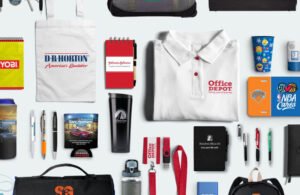


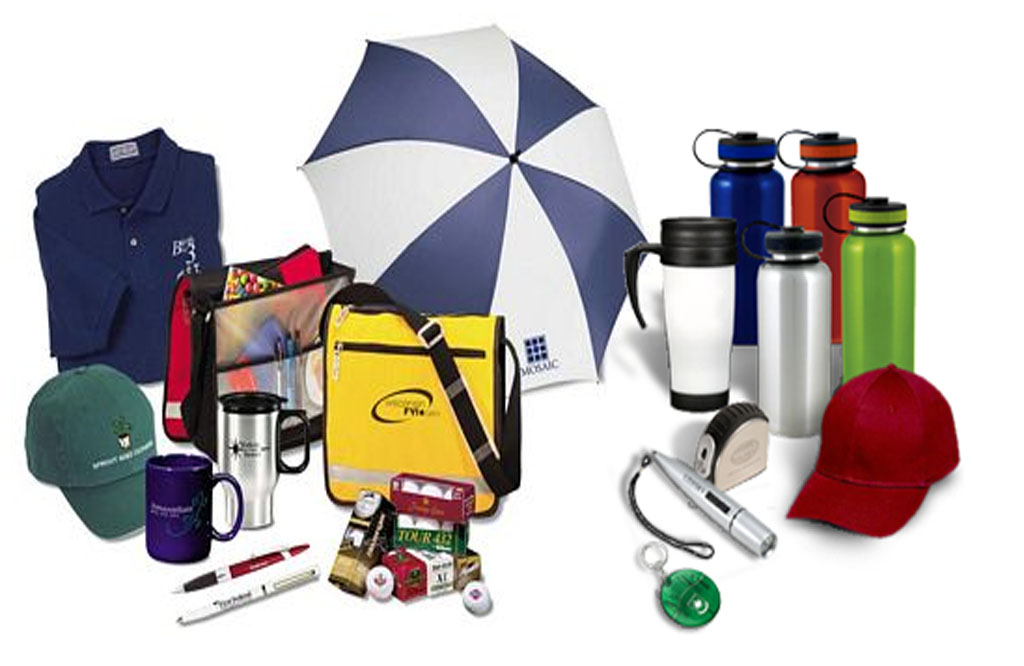
In the relentless arena of modern marketing, businesses are perpetually searching for that edge a way to stretch budgets further, make a more memorable impression, and build lasting brand affinity. For countless companies, from nimble startups to established corporations, that edge has been found in a seemingly simple strategy: sourcing custom promotional products in bulk from China. This is not merely a tale of cost-saving; it is a narrative about scale, customization, and strategic supply chain mastery.
To the uninitiated, the process may appear daunting, shrouded in the complexities of international trade, language barriers, and logistical puzzles. However, those who navigate these waters successfully understand that China’s manufacturing ecosystem offers an unparalleled combination of flexibility, efficiency, and cost-effectiveness for branded merchandise. This deep dive explores the compelling reasons behind this global trend, the practical pathways to success, and the critical considerations that separate a triumphant campaign from a cautionary tale.
The Irresistible Value Proposition: Why China Reigns Supreme
The primary magnet drawing businesses to Chinese manufacturers is, undeniably, economic. The economies of scale achievable in regions like Guangdong, Zhejiang, and Jiangsu are staggering. When a company orders 10,000 custom-branded power banks or 50,000 embroidered polo shirts, the per-unit cost plummets. This is due to highly specialized supply chains, optimized production lines, and lower overheads. For a marketing director allocating a fixed budget, this means the ability to choose a higher-quality item or to distribute a far greater quantity of products, exponentially increasing brand touchpoints.
Beyond pure cost, however, lies the vast landscape of choice and capability. China is not a monolithic factory but a continent of specialized industrial clusters. One city might be renowned for its silicone and plastic injection molding, perfect for custom-shaped stress balls and tech accessories. Another dominates in textile and garment production, ideal for high-end apparel or budget-friendly tote bags. This specialization means manufacturers possess deep expertise, advanced machinery, and immediate access to raw materials, allowing for a level of product complexity and finish that can be difficult to match elsewhere.
Furthermore, the flexibility in customization is profound. It extends far beyond slapping a logo on a stock item. Businesses can work with suppliers on OEM (Original Equipment Manufacturing) and ODM (Original Design Manufacturing) projects. An ODM approach allows a company to select from a catalog of existing designs and modify them, while OEM involves creating a wholly unique product from scratch. Whether it’s a custom mold for a uniquely shaped USB drive, a proprietary blend of fabrics for performance wear, or bespoke packaging that unboxes as an experience, Chinese factories are built to turn specific visions into tangible products.
Navigating the Pathway: From Concept to Delivery
The journey of sourcing custom promotional products from China is a structured process, demanding attention to detail at every phase. It begins not with an email to a random factory, but with internal clarity. A business must precisely define its objectives: What is the campaign’s goal? Who is the target audience? What is the budget per unit and overall? What is the desired quality level? Answering these questions creates a blueprint and prevents scope creep.
However, astute businesses look beyond flashy websites. They scrutinize supplier credentials: years in business, verified production capacities, and audit reports. They insist on communication with sales representatives who demonstrate product knowledge and responsiveness. A key strategy is to start with a smaller, test order—a “sample order”—before committing to full production. This sample is the physical proof of concept, revealing quality, workmanship, and the supplier’s ability to follow specifications.
Once a partner is selected, the prototyping and sampling phase commences. This is where specifications are translated into a physical sample. Every detail must be documented in a comprehensive Product Specification Sheet: Pantone colors for accuracy, vector artwork files, material grades, dimensions, weight, and packaging requirements. Approval of this sample, often with a signed sample confirmation, is the contract for the production run. It is the business’s quality benchmark.
Then comes production and quality control (QC). While the factory operates the lines, the savvy buyer does not disappear. Implementing third-party QC inspections at critical stages—during production (DUPRO) and pre-shipment (FINAL)—is non-negotiable. An independent inspector visits the factory, checks random units against the approved sample and spec sheet, and provides a detailed report with photos. This step catches defects before goods are sealed in a container, saving thousands in potential losses.
Finally, logistics and shipping present their own calculus. The prevailing Incoterms like FOB (Free On Board) or EXW (Ex Works) define responsibility and cost. Businesses must account for sea freight (most cost-effective for bulk), air freight (for urgency), customs clearance, duties, and final-mile delivery. Partnering with a reliable freight forwarder can simplify this complex web, ensuring products move from factory floor to warehouse door seamlessly.
The Inherent Challenges and How to Mitigate Them
The path is not without its potential pitfalls. Awareness and preparation are the best defenses.
-
Communication and Cultural Nuances: Time zone differences and language barriers can lead to misunderstandings. Clear, simple language, visual aids, and patience are vital. Using tools like WeChat for direct factory communication can be beneficial. Understanding Chinese holidays, like Lunar New Year, which can shut down industry for weeks, is crucial for timeline planning.
-
Quality Discrepancies: The fear of receiving subpar goods is real. The antidote is the rigorous sampling and QC process described earlier. Never approve a sample you are not 100% satisfied with, as mass production will only magnify its flaws.
-
Intellectual Property (IP) Protection: Sharing designs carries inherent risk. Working with verified suppliers, using Non-Disclosure Agreements (NDAs), and registering trademarks where possible are prudent steps. Reputable manufacturers value long-term relationships over the short-term gain of copying a design.
-
Hidden Costs and Timeline Inflation: The quoted price per unit is rarely the final landed cost. Wise businesses build a buffer for shipping, insurance, customs duties, and potential port fees. Similarly, production timelines should include contingency for sample revisions, production delays, and port congestion.
A Case Study in Strategic Success
Consider a mid-sized tech company, “AlphaTech,” launching a new software platform at a major industry trade show. Their goal is to generate high-quality leads. Instead of ordering generic USB drives from a local supplier, they source custom-designed, bamboo-cased power banks from a specialized factory in Shenzhen. The process involves:
-
Strategy: Targeting a premium feel to reflect their brand.
-
Sourcing: Vetting three suppliers on Alibaba, ordering samples from each.
-
Customization: Creating a unique mold for the bamboo case and using laser engraving for their logo.
-
QC: A pre-shipment inspection confirms the quality of the first 2,000 units.
-
Logistics: Shipping by sea, arriving with ample time before the event.
The result? The premium product becomes a sought-after item at the booth, attendees keep and use the power bank daily (extending brand visibility far beyond the event), and the cost per unit, even with shipping and duties, was 40% lower than sourcing a similar-quality item locally. The investment in the process yielded a superior marketing asset and a higher ROI.
Conclusion: A Tool for the Discerning Marketer
Sourcing custom promotional products in bulk from China is not a magic bullet, nor is it the right choice for every single order. For rush jobs, ultra-small quantities, or items with extreme simplicity, local suppliers may be more appropriate. However, for strategic, large-scale campaigns where budget efficiency, deep customization, and volume are paramount, it represents a powerful channel.
It is a process that rewards diligence, clear communication, and strategic partnership. For the business that takes the time to understand the landscape, vet its partners thoroughly, and manage the process with professional care, the rewards are substantial: a trove of high-impact, brand-building tools that engage audiences, empower teams, and deliver a remarkable return on investment. In the end, it transforms the humble promotional product from a giveaway into a calculated component of global marketing strategy.